


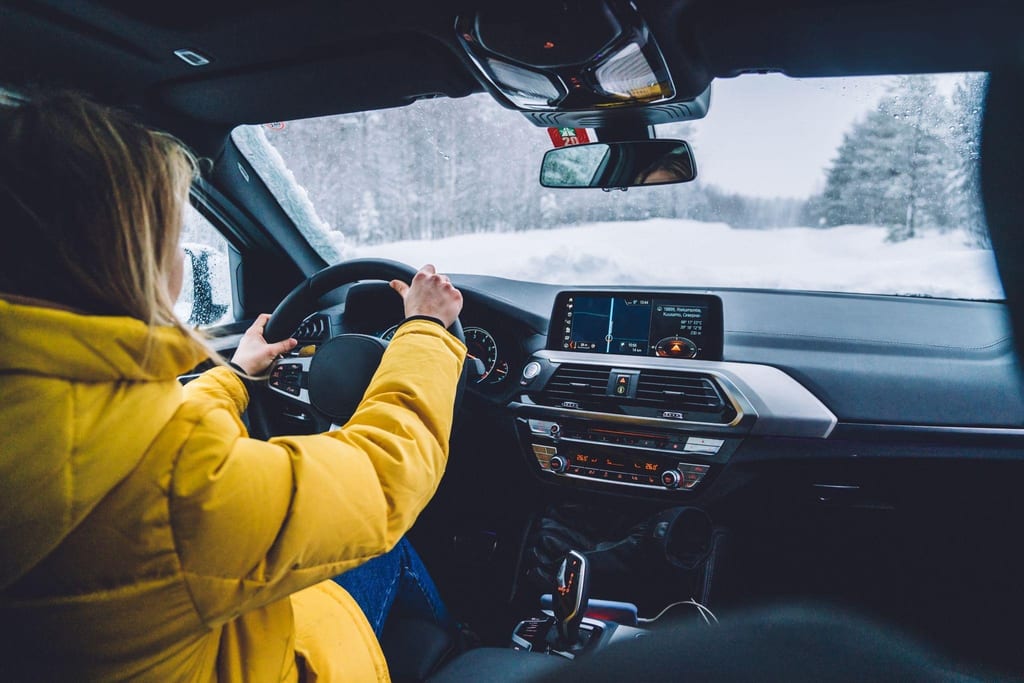
If you have ever headed up a Utah canyon in winter, you know how fast things can change. A road that looks fine at the bottom can turn slick and crowded a few miles higher, often before the forecast says it will. It surprises newcomers and lifelong locals alike, so you are in good company.
This guide to winter driving in Utah focuses on canyon and mountain roads, including what Utah’s traction law requires of you and how your auto coverage fits in. You’ll also pick up winter driving tips to use before the next storm.

What is the Utah traction law?
The Utah traction law is an administrative rule — R920-6 — that UDOT and law enforcement implement when road conditions call for it. Since UDOT can now require traction equipment up to 24 hours before a storm arrives, it pays to plan ahead.
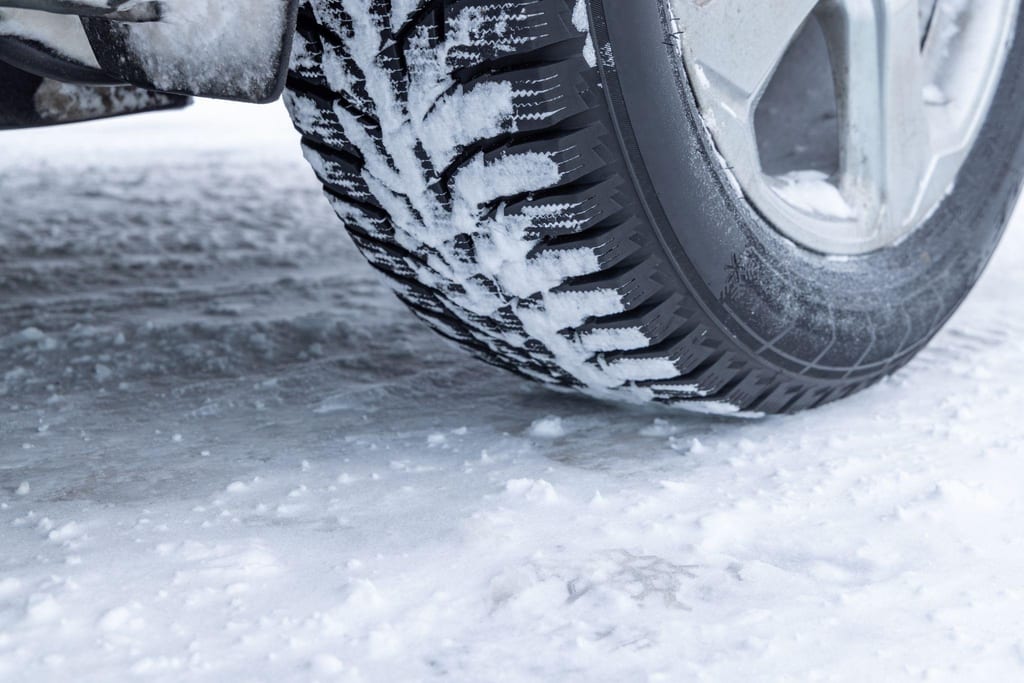
In the Cottonwood Canyons, a new Class 3 designation applies when the entrance beacons flash, and your tires need at least 5/32 inch of tread. Four-wheel and all-wheel drive vehicles need M+S-rated or snow-rated tires, while two-wheel drive vehicles need 3PMSF snow tires or chains on two drive wheels. Those are the core Utah traction law requirements.
Step-by-step canyon driving guide
These mountain driving tips apply to nearly any Utah canyon, making them a great resource for the winter season.
- Check conditions before you leave. Review UDOT’s road information, and allow an extra 30 to 45 minutes for an early commute after a storm.
- Inspect your tires. Measure tread depth and confirm the snow rating on every tire.
- Stock your vehicle. Bring a full tank of gas, water, snacks, a phone charger, and a blanket, since neither Cottonwood Canyon nor the area has a gas station.
- Slow down and add space. Even properly equipped vehicles could lose control at excessive speed.
- Downshift on descents. UDOT recommends the lowest gear possible so engine compression does the slowing.
- Know when to turn around. If conditions feel too slick, the Utah Highway Patrol suggests waiting when you can.
Why preparing pays off
On storm days, officers will turn back vehicles that lack the right tires, so a prepared car keeps you on your plans while an unprepared one sends you home.
Your preparation also extends beyond your own trip, since the traction law aims to prevent drivers from creating hazards or slowing the plows, and a single slide-off will back up traffic behind it.
Following these mountain driving tips costs a few minutes in the driveway, while a slide-off can cost you a deductible and a tow.
Common mistakes to avoid
The most common mistake is driving too fast for conditions, which is why slowing down tops the list of winter driving tips. All-wheel drive cannot create grip on ice, and many drivers assume all-season tires are enough, even though most lack the 3PMSF rating because their rubber hardens in the cold.
Another trap is trusting a warm afternoon, since slide-offs often follow a warm spell when drivers do not expect ice. Riding the brakes downhill is a habit worth breaking, too.
Data and statistics on canyon safety
These figures show why winter driving in Utah deserves respect.
- Utah Department of Public Safety data reported by The Salt Lake Tribune counted 3,911 crashes on Utah roads during winter driving conditions in 2021.
- That report also counted around 135 snowy-weather crashes on I-80 between the Parleys Canyon entrance and the Park City exit in 2021.
- A UDOT news release explains that new legislation allows traction enforcement up to 24 hours before a storm.
- The UDOT traction law page details the traction classes and tire standards.
Tools and products
Beyond good mountain driving tips, a few inexpensive items help:
- A tread depth gauge
- Chains or snow socks
- An ice scraper
- Extra washer fluid
UDOT’s Cottonwood sticker program is usually offered free of charge from fall through February and confirms that your tires meet Cottonwood requirements.
Frequently asked questions about safe winter driving
Q: What are the Utah traction law requirements?
When UDOT activates the law, four-wheel- and all-wheel-drive vehicles need M+S or snow-rated tires, while two-wheel-drive vehicles need 3PMSF tires or chains on two drive wheels. In the Cottonwoods, every tire also needs at least 5/32 inch of tread.
Q: Do I need chains to drive in a Utah canyon?
Not always. Four-wheel- and all-wheel-drive vehicles with proper tires can meet the requirement without chains, and two-wheel-drive vehicles can use 3PMSF tires. Chains still give the most reliable traction in severe conditions, so carrying a set gives you a backup plan.
Q: What are the best winter driving tips for canyon roads?
Slow down, leave extra space, check conditions before you go, and use a low gear on descents so engine compression controls your speed. Keep your tires in good shape and carry supplies in case a storm closure leaves you waiting.
Q: Does car insurance cover a slide-off in the snow?
It depends on your policy. Collision coverage generally applies when your vehicle hits an object or leaves the road, and comprehensive coverage can apply to damage from falling rocks or animals. Check your deductible and ask us about roadside assistance.
Q: What happens if my vehicle does not meet traction requirements?
Officers at the Cottonwood Canyon checkpoints can turn you around, and a violation is an infraction that can carry a fine of up to $750. I included a pointer to the sticker program.
Q: What should I do if I slide off the road in a canyon?
If it’s safe, stay in your vehicle with your hazard lights on, and call 911 if anyone is hurt or you’re blocking traffic. Afterward, photograph the scene and contact your insurer.
Get your auto insurance quote from Bear River Insurance
Winter driving in Utah rewards people who prepare early and slow down when the road asks them to. With the traction law and a few mountain driving tips in your back pocket, every canyon trip gets safer for you and your neighbors. Even careful drivers meet ice nobody saw coming, and that’s where the right coverage earns its keep.
Your friends at Bear River Insurance would be glad to walk through how your auto policy handles a slide-off, from your deductible to roadside assistance. Whether you are protecting a car, a home, a rental, or a business, we are here for all of your coverage needs.
Reach out to Bear River Insurance today, and let us help you head into winter with more peace of mind.